
What is animal rehabilitation?
Animal rehabilitation is the application of physiotherapy assessment and treatment techniques to animal patients (i.e. horses, farm animals, dogs, cats, or other small animals). Human physiotherapists have extensive training in the assessment and treatment of not only musculoskeletal injuries and chronic conditions such as osteoarthritis, but also neurological conditions, spinal injuries and vestibular (inner ear) dysfunction. Physiotherapists can complete advanced training and certification in how to apply their knowledge and skills to animals and then are referred to as Animal Rehabilitation Therapists. The goals of Animal Rehabilitation are no different than those of human physical therapy; to relieve pain, restore range of motion and movement, improve function, prevent injuries, and expand the physical potential and quality of life of the patient. Animal Rehabilitation Therapists can address your animal’s neuromusculoskeletal needs at every stage of healing.
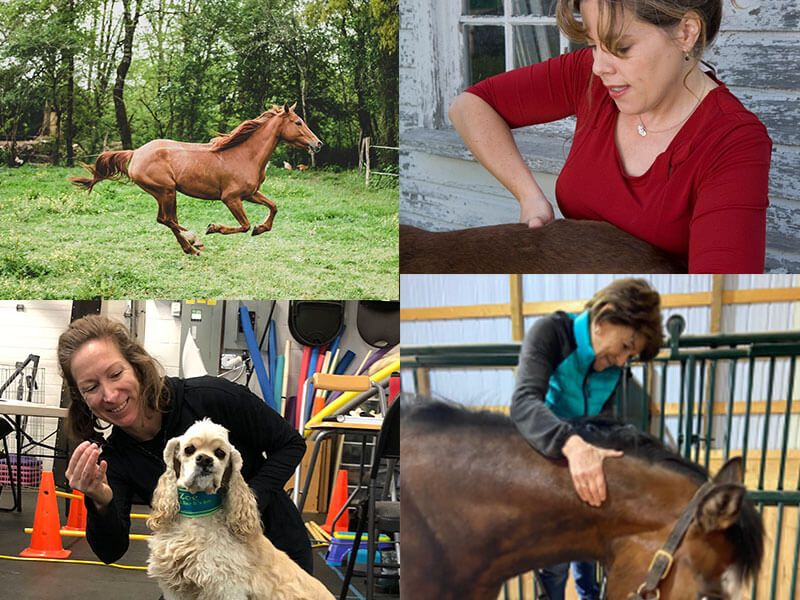
Animal Rehabilitation Therapists actively collaborate with veterinarians and other allied animal healthcare providers to ensure a multidisciplinary approach to assessment, treatment and overall rehabilitation of your animals so that the best possible outcomes of care are achieved.
Animal Rehabilitation Therapists actively update their education to remain current on the latest treatments and technologies in order to best support their animal patients.
How can animal rehabilitation help?
Animals can sustain the same types of injuries/problems that people can (sprains/strains, arthritis, etc) and some require surgery. Animal Rehabilitation can help to restore function and to facilitate your animal’s return to the activities they love, whether it’s playing at the off leash parks, running in the field or paddock, competing in an event or simply being a companion!
Assessment
A physiotherapist trained in Animal Rehabilitation will evaluate your animal’s movement, the spine, joints, ligaments, muscles and tendons. The Animal Rehabilitation Therapists will also evaluate strength, coordination, functional abilities, and other physical properties to determine the impact of an injury, degenerative or inflammatory disease, or disability.
Clinical Impression and Treatment Plan
Your Animal Rehabilitation Therapists will collect all of the assessment findings and use clinical reasoning to create a rehabilitation diagnosis.
Your Animal Rehabilitation Therapist will then determine how best to restore proper movement and reduce the pain from an injury or disability based on scientific knowledge and a thorough assessment of your pet’s condition, lifestyle, and environment. He or she will work with you to plan an individualized treatment program, including a home program of exercises that aid in overall recovery. Your Animal Rehabilitation Therapist will then perform regular reassessments and progression of the rehabilitation based on improvement.
Education
An Animal Rehabilitation Therapist will give you lots of information on your animal’s injury, anatomy, stages of healing and recovery, what to expect going through rehabilitation, what activities to avoid that might hinder recovery, and how to prevent injuries in the future.
How do I know if my animal needs rehabilitation?
- Has your animal had an accident, trauma, or a recent, past, or recurrent injury that is limiting movement or causing pain?
- Has your animal had a recent surgery (orthopedic or spinal surgeries)?
- Is your animal not functioning or performing to the best of his or her ability (whether able to go over a jump or just get up from lying)?
- Does your animal perform in competitive activities (strength and endurance training may be beneficial)?
- Has your animal developed a behavioural problem for no apparent reason (causes can include ill health or pain)?
- Does your animal have a sore back when you pet or brush it?
- Has your animal developed weakness somewhere in the body?
If you answered yes to any of these questions, then your animal may benefit from an Animal Rehabilitation Assessment and a targeted rehabilitation program to help.
Evaluation and treatment
Your Animal Rehabilitation Therapist may utilize a variety of tools and methods available to them to evaluate and treat your animal:
-
Modalities refer to the tools or machines utilized by therapists and may include ultrasound, laser, electrical muscle stimulation, magnetic field therapy, shockwave, acupuncture, and others.
-
Manual therapy encompasses mobilizations (specific joint movements that decrease pain and improve movement), manipulations, massage and stretching. Physical therapists have specialized training in biomechanics of the spine and extremity joints and of muscle origins, insertions, and actions so can use manual therapy to reduce pain, and to restore joint movement and function.
-
Exercise prescription can address your animal’s neuromusculoskeletal needs at every stage of healing.
-
Regular reassessment and progression of the rehabilitation program based on your animal’s improvement and the stages of healing.
